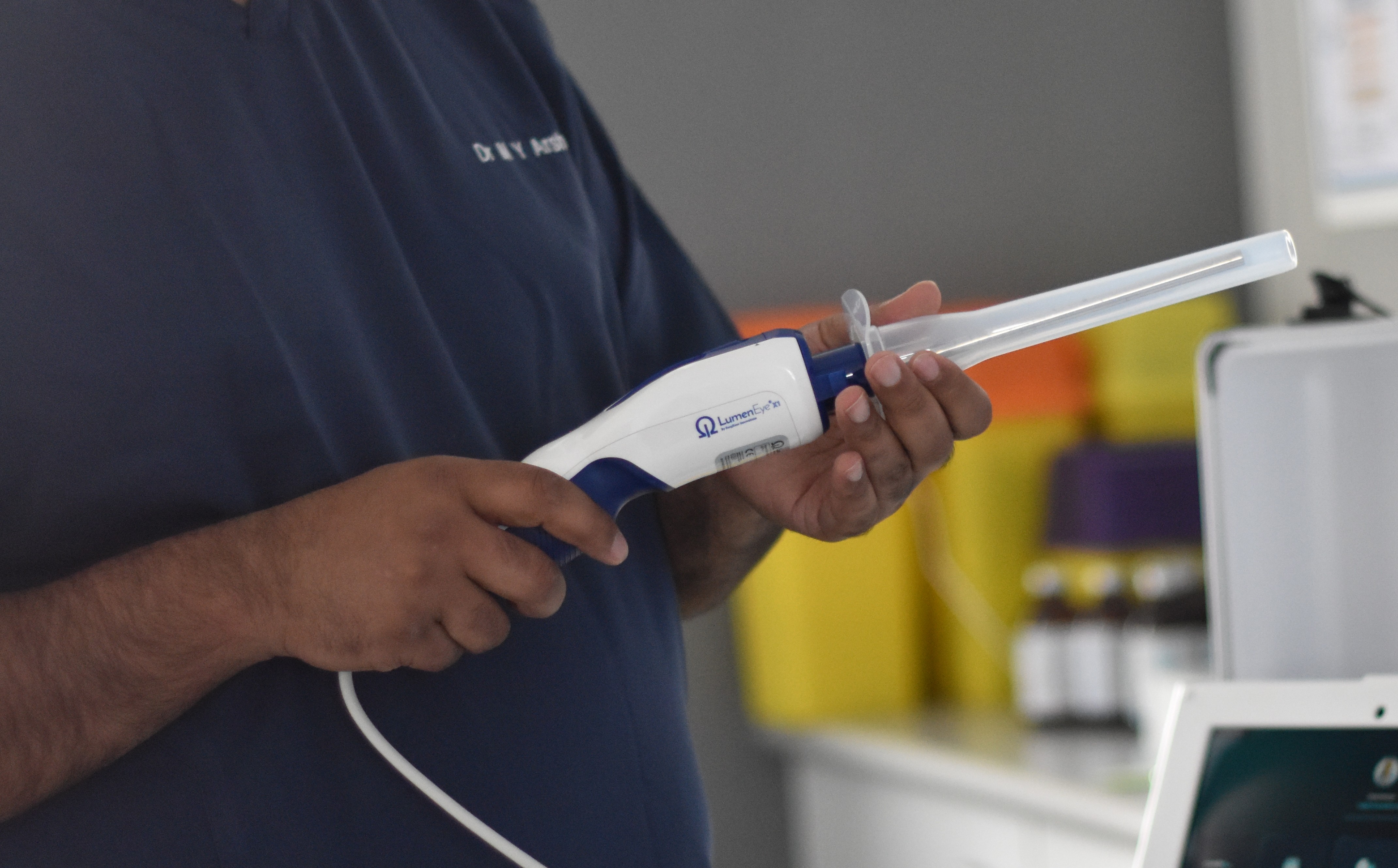
This study evaluated the clinical use, safety, and feasibility of the LumenEye digital rectoscope in a dedicated outpatient colorectal clinic at Buckinghamshire Healthcare NHS Trust. LumenEye is a high-definition digital rigid rectoscope that allows visualisation of the rectum up to 20 cm, with capabilities for video streaming and targeted biopsy without the need for sedation. The device was primarily used to monitor patients with rectal cancer undergoing a “watch-and-wait” (WAW) organ-preservation strategy after achieving a clinical complete response following chemoradiotherapy, a group that requires frequent surveillance to detect early recurrence. In this single-centre retrospective cohort study, 327 LumenEye procedures performed between August 2023 and November 2024 were analysed. Over half of the procedures were conducted for WAW patients, with the remainder used for assessment of symptoms such as rectal bleeding or changes in bowel habit. The procedure demonstrated a strong safety profile and high tolerability in an outpatient setting: pain requiring analgesia occurred in 5.8% of cases, early termination occurred in 2.1%, and minor bleeding occurred in 1.2%, with no reported perforations or infections. Importantly, only one possible missed local recurrence (0.3%) was identified during follow-up, suggesting a low risk of missed pathology. The clinic model required minimal resources, typically involving a senior colorectal surgeon and a nurse or healthcare assistant, and allowed direct clinical correlation between rectal examination findings and radiological surveillance. Overall, the study demonstrates that LumenEye can be safely integrated into outpatient colorectal practice and may provide a practical alternative to traditional endoscopic surveillance, particularly in settings where endoscopy capacity is limited or where frequent monitoring is required for rectal cancer patients managed with organ-preserving strategies.